

Review of the Moving Teknia 2023-2025 Strategic Plan
“Moving Teknia” has been Teknia’s strategic plan for the period 2023–2025. This plan is based on five fundamental pillars that have shaped the company’s direction over the last three years. Now that it has come to an end, we take stock of what has been achieved, what we have learnt and the challenges ahead.
What headline sums up the conclusion of the Moving Teknia Strategic Plan?
The assessment of the strategic plan now that it has come to an end is positive. It was conceived as an ambitious plan that sought to transform the company into a more efficient and collaborative organisation, and thanks to everyone’s efforts, we are achieving this. It is important to highlight that over the past three years the automotive sector has changed substantially; 2023 was a year of significant growth, whilst 2024 and 2025 have been years of contraction. In this regard, we can highlight Teknia’s ability to adapt, whilst maintaining the direction set out by this strategic plan.
In quantitative terms, following the work carried out over these three years, we have concluded the plan with an achievement rate of around 60%, with the main factor holding us back being the growth in sales volume resulting from the absence of inorganic growth. On the other hand, it is worth highlighting the work carried out with our stakeholders, with whom we have developed a relationship of trust that enables us to deal effectively with complex situations such as those currently facing the sector.
Taking stock, how has each of the plan’s pillars progressed? Which one has been the most successful?
It is important to note that not all pillars started from the same level of maturity, so we can say that this comparison is not entirely “fair”. That said, all five pillars have made significant progress, but the “standout success” has undoubtedly been pillar one: Being a trusted partner. We have strengthened our external positioning and reputation with our stakeholders and strengthened our relationship with clients, which has enabled us to secure projects of high strategic interest to us. Furthermore, at an institutional level, this has been underpinned by milestones such as the financing from the European Investment Bank. On the other hand, we have placed greater focus on our people, creating a new integrated management system that allows us to identify talent within the company, in order to empower and retain it.
In the second pillar, Advanced Manufacturing, the highlight has been the creation of the TCI (Teknia Centre of Innovation), a centre focused on a model of collaboration and centralisation of commercial and technical activity that enables us to respond to our clients more swiftly and successfully develop projects with greater added value. Indeed, we can see the results of this in our co-development projects with two leading customers.
Meanwhile, in the third pillar, Data-Driven Company, we have made significant progress: unlike investments related to external projects, which have been delayed or cancelled due to the sector’s current situation, digital transformation projects yield an internal return in the form of greater company efficiency, which is why we have decisively prioritised investment in this area.
In New Mobility, the fourth pillar of our plan, the most notable milestone has been the creation of Teknia Partners during the past financial year, a financial vehicle for making minority investments in businesses related to new mobility. Through Teknia Partners, as part of the strategic plan, we have made two investments that are enabling us to develop our expertise in the fields of energy storage and urban electric mobility.
Finally, in the fifth and final pillar, Focused on Profitability, we have also achieved significant milestones. We now have a new financial strategy that has enabled us to maintain optimal solvency and debt ratios, which are reflected in our current financing options. At the same time, we are strictly managing our investments, ensuring maximum returns and short-term cash generation.
Apart from the sector’s context, which has influenced the Plan’s development, what has been the biggest challenge over these three years?
The biggest challenge is managing a profound cultural transformation, moving from being a decentralised company focused on individual plants to an organisation with a more global and corporate vision. In this process, where we have also introduced a new project-based way of working, a new financial strategy and are undertaking an accelerated digital transformation process, it is normal for there to be some resistance to change. The plants have their own day-to-day operations and their own inertia, and ultimately, people take longer to adapt than technical processes do, so they require closer support.
And the future? What will the pillars of the new strategic plan be looking ahead to 2028?
It will be a plan that builds on the existing approach and maintains the course already set, reinforcing those areas with the greatest potential for improvement that we have identified over the last three years. With Moving Teknia we have laid solid foundations; now it is time to realise their full potential, so we have defined three priority areas: improving operational efficiency, increasing control over both finances and systems, and achieving a balance based on diversification across all areas of the company. We want to minimise the company’s risk by balancing sales between Europe and North America, evaluating opportunities for collaboration with the Asian market, and maintaining a balanced commitment to our four current technologies, without losing sight of developments in the electrification market.
“Moving Teknia” has been Teknia’s strategic plan for the period 2023–2025. This plan is based on five fundamental pillars that have shaped the company’s direction over the last three years. Now that it has come to an end, we take stock of what has been achieved, what we have learnt and the challenges ahead.
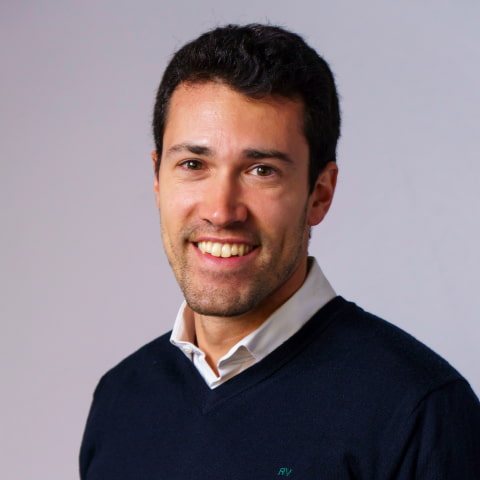
- Alejandro Deleyto
- Chief Strategy Officer (CSO)

- Valeria Boggian
- Strategy Project Manager