

Sustainability as a competitive advantage: Teknia, a reliable partner for our customers
Responsible management of the value chain is becoming increasingly important for all stakeholders involved. Currently, the inclusion of ESG requirements and information is standard practice in the tendering and awarding of projects by our clients. In this regard, Teknia has a proven track record in this area, which helps position us as a trusted and competitive partner.
How would you describe the evolution of sustainability requirements from clients in recent years? Is there a growing trend in the market? Why?
The evolution has been dramatic: ten years ago, these requirements were practically non-existent, yet over the last two or three years we have seen a real explosion in demand for ESG information from clients. Right now, supplier sustainability has become a mandatory requirement for project nominations. This stems both from the growing regulatory pressure that our clients (and the rest of the supply chain, including us) must comply with, and from the sector’s increased awareness of ESG risks.
What kind of sustainability and ESG requirements are we receiving most frequently from our clients? How does Teknia coordinate the response to these requests?
Currently, clients request a wide range of technical and corporate documentation. In the ESG sphere, codes of conduct undoubtedly stand out, but we also receive numerous sector-specific ad hoc questionnaires such as the SAQ questionnaire or assessments from platforms such as EcoVadis, where this year we have improved on last year’s results. On the other hand, there is a strong focus on the roadmap and decarbonisation targets. Clear examples include the growing demand from customers regarding our climate neutrality targets and product carbon footprint (PCF) information.
Depending on the type of request, there is a process where the plant operates more independently, or another where it relies more on corporate support. To foster this independence, the sustainability department itself supports us with an ESG library containing extensive documentation and validated responses. If there are specific cases where it is required, the sustainability department supports and coordinates the information to be submitted.
To what extent do clients use ESG criteria as part of the project nomination or award process? How important is this for the commercial process?
Price remains the determining factor in awarding a project, but ESG criteria are, at present, an important requirement that must be met, as they act as an additional ‘check’ that clients need to carry out before making a decision in the award process. ESG criteria will carry more or less weight depending on the case, but they are certainly not optional; we cannot afford to miss out on opportunities on the sustainability front, especially as we have been working on this for some time. All other things being equal, sound ESG management, backed by robust documentation, can tip the balance in Teknia’s favour.
Do you consider that Teknia’s ESG management and maturity position us competitively against other suppliers?
Yes, the company’s maturity in this area is a differentiating factor. Tier 1 clients have, on occasion, been pleasantly surprised by Teknia’s responses to their requirements, suggesting that other competitors are not at that level in this area. Furthermore, when in some cases both sustainability teams meet and exchange information and ideas, speaking the same language puts us in a better position, as does providing reliable and robust information in response to such requests.
What message would you like to convey to clients regarding our sustainability commitments?
The main message is that, for Teknia, sustainability is a fundamental aspect of our operations and has been a core focus of our work for many years. It is a commitment elevated to the highest strategic level within the company, implemented through a defined strategy and a clear roadmap.
In this way, our customers can regard Teknia as a reliable partner for managing ESG risks across the value chain. We also want to convey that we are ready to support them in their own decarbonisation objectives, backed by our internal targets in this area and the development of tools for measuring product carbon footprints. All of this helps to strengthen a responsible value chain, both upstream and downstream.
“The main message we convey to our clients is that, for Teknia, sustainability is a fundamental aspect of our operations and has been a core focus of our work for many years. It is a commitment that has been elevated to the highest strategic level within the company, implemented through a defined strategy and a clear roadmap.”
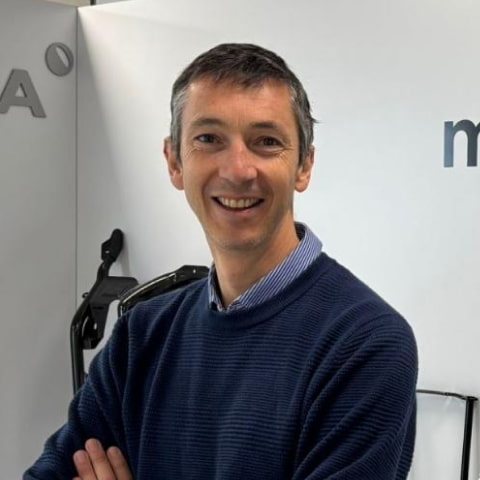
- Aritz Ruiz
- Metal Sales Manager

- Pawel Raczkowski
- Aluminium Sales Manager

- Laura Menéndez Aparicio
- Plastics Sales Manager