


Thanks to our large team of professionals, standardisation, geographical reach and global capabilities, we work alongside the world’s leading suppliers and OEM manufacturers. To do this, we use well-defined processes that save energy, are sustainable over time and result in high-quality products.
Plastic injection
Plastic injection is one of the key technologies within Teknia’s multi-technology offering to provide innovative mobility manufacturing solutions. As its name suggests, this process begins with the introduction of plastic material into a cylinder called a spindle. Here, the material is melted at temperatures exceeding 200ºC.
Once these materials have become fluid, they are injected under pressure into a mould that has the shape of the part desired by the customer. Finally, the tool is cooled until the plastic solidifies, resulting in the final component in its definitive form.
It should be noted that our team of professionals uses a wide variety of plastic materials that they receive in the form of pellets. The most notable materials used in the company’s plastic injection process are polypropylene, polyamide, acetal resins, polycarbonates in different grades, ABS and TPE, among others.

Wide range of components and international production
Teknia is a highly regarded plastic injection supplier due to its standardisation, technical expertise in meeting customer requirements and, above all, its global capabilities. In fact, one factor that sets the Group apart from its competitors is the specialisation of products by production plant, with a presence in America and Europe.
The company works mainly in three product lines developed using plastic injection, which are:
- Safety, where parts are developed for vehicle braking systems, such as brake fluid reservoirs and all their components, as well as for airbag systems. Examples include airbag housings and covers, which are both technical and aesthetic components of the steering wheel.
- Interiors, with a wide range of products available, including seats, coverings and housings for head-up displays.
- Electronics, which covers a wide variety of components. The main family is lighting, where Teknia specialises in transparent parts, reflectors and headlight housings, among other elements.

Proof of Teknia’s outstanding internalisation of this technology is the fact that the factories in Azuqueca de Henares (Spain), Uhersky Brod (Czech Republic) and San Luis Potosí (Mexico) develop safety and interior parts; Martos (Spain) produces lighting components; and Rzeszow (Poland) and San Luis Potosí (Mexico) produce tanks and their electronic components.
This is highly valued by customers, which include both OEM and Tier-1 manufacturers. The former group includes major automotive firms such as Volkswagen, Stellantis, Ford, BMW, Hyundai, Toyota and Honda, while the Tier-1 group includes solid companies in the automotive components industry such as Bosch, Valeo, Autoliv, ZF, Continental and Nippon Seiki.


Washer tank

Claxon horn

Light parts

Cable guides

Airbag cover

Brake reservoir

Charger gun

ABCD pillars

Headrest sleeve

Roof grab handle

Side shields and seating parts

Seat side balance
Are you looking for more information about our plastic injection solutions?
High-tech, highly cost-effective process
Plastic injection is a widely used technology in automotive manufacturing. That is why at Teknia we have strived to gain in-depth knowledge of it. Although it is a simpler, faster and more economical production process than other technologies, we are at the forefront of innovation, technical knowledge and automation in the process.
At our plastic injection plants, located in different locations internationally, we work with conventional injection, bi-injection and gas injection. In addition, we have other complementary technologies, such as heat or ultrasonic welding. This enables us to carry out various specialised processes, such as painting, decorating and welding parts, and even integrating different materials as a multi-technology supplier.

Automation also plays an essential role in processes such as material feeding and product unloading, assembly and overmoulding of metal inserts. This not only allows for great versatility and efficiency at all levels, but also enables the design of truly complex products. Top-quality products that adapt to the needs of our global customers and enable us to meet the demanding requirements of the sector.
Maximum quality in all processes
Thanks to our technical knowledge and expertise, we are able to offer high-quality plastic injection products. Teknia ensures quality throughout the supply chain with procedures that cover the entire process, from the receipt of raw materials for production to the final delivery of the product to customers.
The company’s strict quality controls begin with the materials and components purchased. To this end, a series of parameters defined by the manufacturers are used. In addition, Teknia has a quality system that covers all stages of the process. Examples of this are the engineering definition of the mould, the machines, the initial tests and the specific control guidelines for each product.
Likewise, special emphasis is placed on quality controls during the most critical stages of the manufacturing process in plastic injection technology. These are the definition of injection parameters in a new reference or product, as well as the control of external mould cooling systems and temperature-controlled areas.
Guarantee of compliance with the strictest international standards
The automotive industry is one of the largest and most global sectors we can find. Because of this, there are international regulations that aim to establish a common language and framework for all component suppliers, regardless of their geographical location.
Although the regulations are extensive, some of the certifications most commonly used by automotive component manufacturers refer to key aspects such as quality, the environment, energy management and safety.
In this regard, it should be noted that the parts manufactured by Teknia comply with the most stringent certifications and quality standards on the global market. Currently, all of the company’s plants are certified to two essential industry standards:
- IATF 16949 standard, which adds additional requirements to ISO 9001 certification for the establishment of a Quality Management System (QMS) in the automotive industry. These focus on continuous improvement, defect prevention and waste reduction in the automotive supply chain.
- ISO 14001 standard, which establishes the requirements for an Environmental Management System (EMS) in organisations. Its objective is to help companies in the automotive sector to manage their environmental responsibilities effectively and continuously improve their environmental performance.

In short, the Teknia Group is actively working towards obtaining TISAX (Trusted Information Security Assessment Exchange) ISO 27001 certification, a global standard for information security management in the automotive supply chain.
In the coming years, the company also hopes to obtain ISO 50001 energy efficiency certification. This standard provides organisations with a framework for establishing, implementing, maintaining and improving an energy management system. Its aim is to help companies improve energy efficiency and reduce energy-related costs.

Teknia is also able to meet all specific customer standards, with the capacity to adapt to any requirements they may have. For example, VDA 6.3. This audit focuses on evaluating and improving the capacity and performance of the different processes carried out within the manufacturing plant of original equipment suppliers, as well as how these are managed in terms of continuous improvement.
Sustainability is in Teknia's DNA
Sustainability is now a key part of industry, the economy and society. We want to contribute to generating a positive impact on people and the environment, which is why sustainability is integrated into our business strategy. It has been part of people’s daily lives and the company’s operations since our inception.
As a long-term goal, we seek to have a positive impact on people, the environment and governance. These are all fundamental pillars for the company in all its decisions: we want to be the best partner for mobility manufacturing, offering sustainable, safe and innovative solutions.
At Teknia, we work to reduce the environmental impact of production with several lines of work that promote energy saving and the circular economy in the supply chain. In this regard, all the energy consumed comes from sustainable sources, while we improve process efficiency by installing variable speed drives in our equipment to reduce consumption.
Furthermore, we promote the use of recycled materials that do not affect product quality but help us reduce the company’s environmental footprint. Finally, we recycle water from the painting lines and separate household waste so that it can be properly treated. You can find more information in our latest Sustainability Report.

The combination of technologies, efficient and competitive production processes, and advanced capabilities for manufacturing high-quality components highlight Teknia’s leadership in the production of plastic injection moulded parts for the automotive industry. Through innovation and adaptation to market needs, the Group continues to offer efficient and customised solutions globally, meeting the most stringent international standards.
Plants specialised in plastic injection

Azuqueca

Martos

Tangier

Rzeszów

Uherský Brod

San Luis Potosí
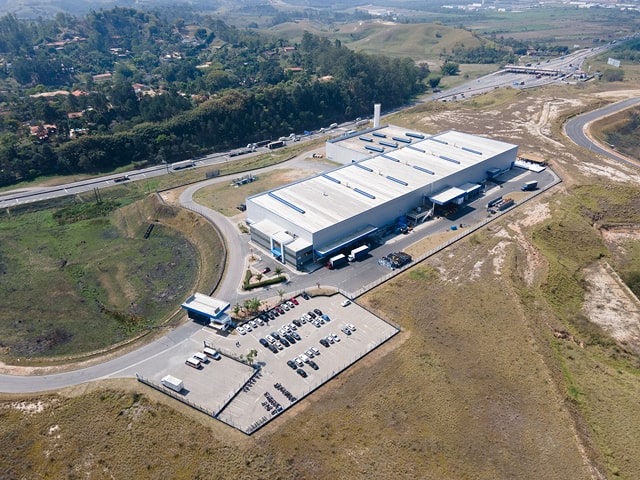
Jacareí
Would you like to learn more about our plastic injection capabilities?
Please fill in the form with your details and we’ll get in touch.
Get to know our products
Get to know our products
